Educate staff
Raise awareness about the problem of underdosage.
In one study, oncology was the only area where flushing was standard practice, in other areas it was optional.16

You have successfully logged out.


Not registered yet?
Reducing Underdosing
On average, a patient receives ten medications per day and will be subject to at least one medication error per day.1,2
Underdosage happens when patients do not receive the full dose of their prescribed drug. lt is an often overlooked and underappreciated cause of medication errors.


One cause of underdosage is the issue of the so-called dead volume. This describes a sometimes-substantial amount of a prescribed intravenous drug remaining in the infusion set after the infusion, and thus never reaching the patientUnderdosage can lead to a decreased treatment response or treatment failure and may even contribute to the growing problem of resistances against antibiotic or anti-cancer treatment.
In 50ml infusions
0%
of the active agent in the residual volume remains in the IV line.3
Up to
0%
Of the drug is underdosed during antibiotic therapy.4
In small-volume infusions up to
0%
of the prescribed dose may not be administered.5
Underdosing may arise due to errors in calculation or preparation of the drug. One often overlooked cause however is what literature refers to as either “dead volume” or “residual volume”. These terms actually mean the same thing, namely the (variable) volume of a prescribed drug that remains in the infusion system after the infusion has ended. Without taking measures to ensure that this volume is infused as well, the patients will not receive their full prescribed medication dose – with potentially adverse consequences such as inefficacy or resistance.6
Dead volume may vary greatly depending on the type of infusion system used, the length and diameters of the infusion tubing and the application of distributors (e.g. Y-connectors), which may also cause significant delays in drug administration, especially in small volumes and when using slow, concentrated infusions.7
Calculations performed at Hull University showed that of an antibiotic regime prescribed for 12 weeks, an underdosage of 16ml per infusion set resulted in the equivalent of 12 missed doses, with “major concern of the impact this could potentially have on clinical outcomes, such as driving antibiotic resistance and undertreating infections”.10

In the US, resistance to antibiotics cause an estimated 2,8 million illnesses and more than 35,000 deaths per year.12 In 2014, the Review on Antimicrobial Resistance (AMR) projected that 10 million deaths caused by AMR could occur by 2050.13
Unrecognized underdosing leads to an almost 200/o relative reduction in survival for warnen receiving adjuvant chemotherapy for breast cancer.15


lt seems fair to assume that the health consequences mentioned will inevitably be associated with langer patient recovery, more drugs needed, a waste of staff time and a waste of money spent on non-effective equipment and drugs.4 Studies confirm this assumption: Researchers at Hull University Teaching Hospital (UK) estimated that the unintentional underdosing of intravenous antibiotics led to a waste of f 9.09 per set (appr. 1,500 antibiotic doses per year), amounting to a drug wastage level calculated at close to f 14,000 per year.10
Raise awareness about the problem of underdosage.
In one study, oncology was the only area where flushing was standard practice, in other areas it was optional.16

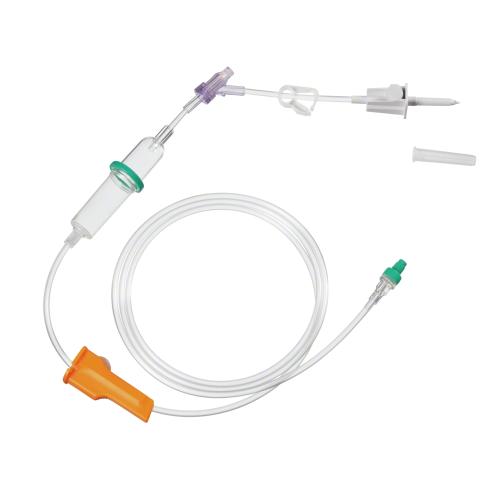
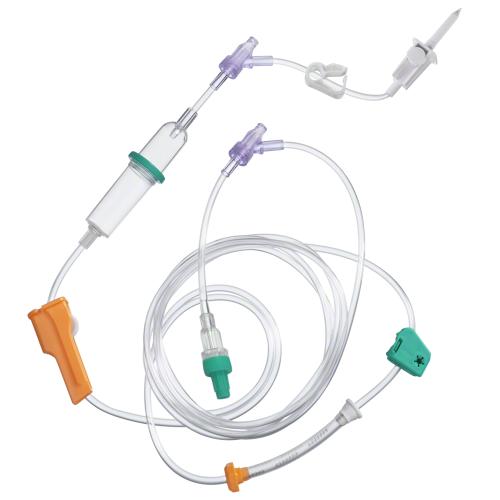
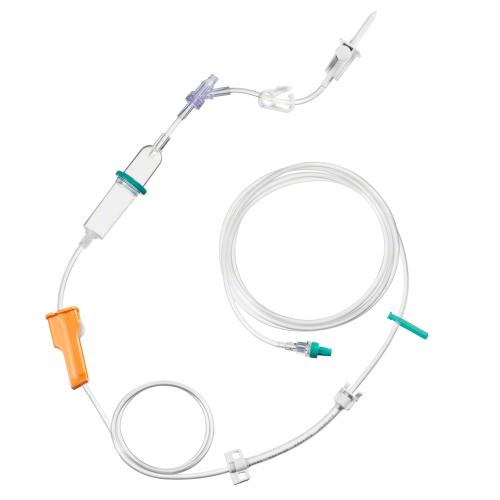
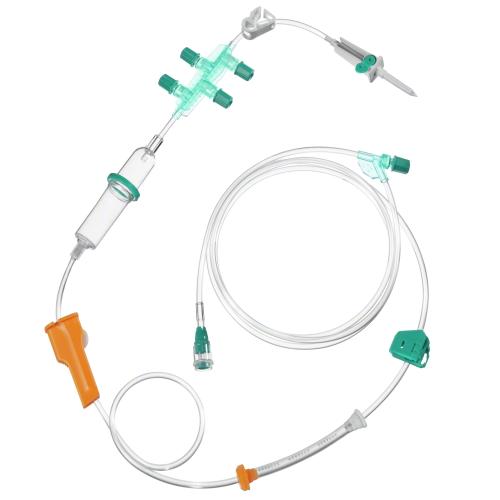
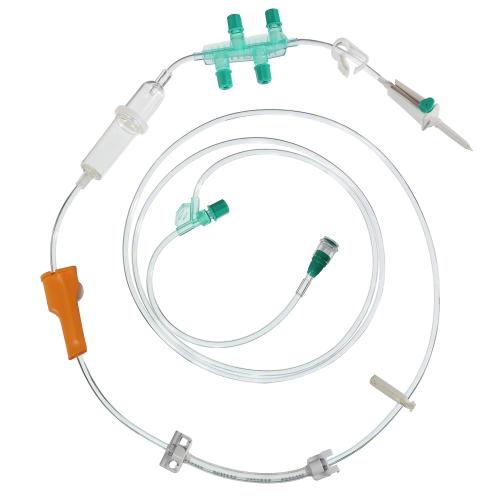
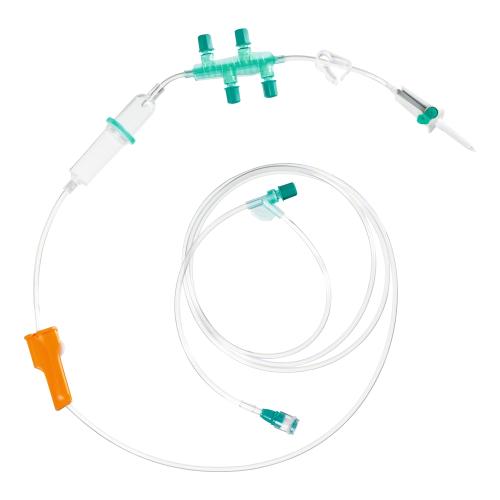
Use microbore administration sets to minimize dead volume.17
Administer drugs through sets whose inherent design ensures that residual volume is reduced to an absolute minimum.
Flushing: Intravenous infusion sets should be routinely flushed with an adequate set to ensure the application of the full drug amount.18
- Caution: Volume used for flushing should be minimized in fluid-restricted patients.
- Caution: Flush with a compatible fluid (NIVAS Guidelines on in-line flushing).
1. Toh MR et al, Prev Med Reports 2014;1:43-47
2. Hughes RG et al, Evidence-based Handbook for Nurses 2008; US Dept of Health and Human Services
3. Plagge H et al, EJHPSCience 2010;16:31-37
4. Dixon R, Hampshire Hospital Foundation Trust, Available via: Are you under infusing IV antibiotic infusions?
5. Cousins D et al, Clinical Pharmacist 2018;10(12):356-357
6. Cooper DM et al, Bri J Nurs 2018;27:2-6
7. Gregerson BG et al, Proc Bayl Univ Med Cent 2018;31(2):168-170
8. Chan YK et al, CMBES Proc., vol 36, no1, May 2013;26.
9. Institute for Safe Medication Practices (ISMP), ISMP Newsletter Volume 25, Issue 24; December 3, 2020, Available via: Hidden Medication Loss When Using a Primary Administration Set for Small-Volume Intermittent Infusions
11. Fish and Ohlinger, Crit Care Clin 2006;22(2):291-311
12. Centers for Disease Control and Prevention (CDC), Department of Health and Human Services, December 2019; Available via: Antibiotic Resistance Threats in the United States13. Fish and Ohlinger, 2006
13. O’Neill J, Review on Antimicrobial Resistance; December 2014; Available via: Antimicrobial Resistance: Tackling a Crisis for the Health and Wealth of Nations14. CDC 2015, https://www.cdc.gov/drugresistance/biggest-threats.html
14. Bowman S et al, Anaesthesia 2013;68:557-561
15. Gurney H et al, Bri J Cancer 2002;86:1297-1302
16. Cooper DM et al, BJON 2018;27(14):S4-S12
17. Institute for Safe Medication Practices (ISMP), ISMP Medication Safety Alert! Volume 25, Issue 24; April 8, 2021, Available via: Additional Strategies to Improve Complete Delivery of Small-Volume Intermittent Infusions
18. Peyko V J Pharm Pract 2023;36(2):194-197
Your feedback matters! Participate in our customer survey to help us enhance our website, products and services. Thank you for your support!