No content results match your keyword.
Content

You have successfully logged out.


Not registered yet?
Preventing skin irritation
The skin around your stoma deserves gentle care from the very beginning. This area is naturally sensitive and can easily become irritated. Learning how to protect and take care of the skin around your stoma can make a big difference in your well-being. Here you can find practical information and useful tips that will help you do that.

0%
of people with a stoma experience skin irritation around the stoma1
Skin irritation is very common and in fact, most of users experience it at some point. The skin around the stoma is sensitive and the state of the skin can be influenced by various factors, such as leakage, adhesives, or even sweat which can lead to redness, soreness, itching, or discomfort.2 If the skin comes into contact with effluent, it can become damaged quickly, causing painful irritation or even infection.
When irritation or other skin problems appear around your stoma, you must make sure to take special care.2 Keeping the skin around the stoma healthy is essential for good adhesion of your stoma bag and for your overall comfort.3
Skin complications
Skin irritation around your stoma can happen for many different reasons. Some of the most common causes are:
The baseplate may stick too strongly and pull on the skin, or not stick well enough, which can lead to leaks and irritation.
When effluent touches the skin, this can cause irritation, such as redness, soreness, or a burning feeling.
Some people react to ingredients in adhesives, skin barriers, or cleaning products, which can lead to itching, redness, or a rash.
Taking the baseplate or pouch off too often can make the skin fragile or sore.
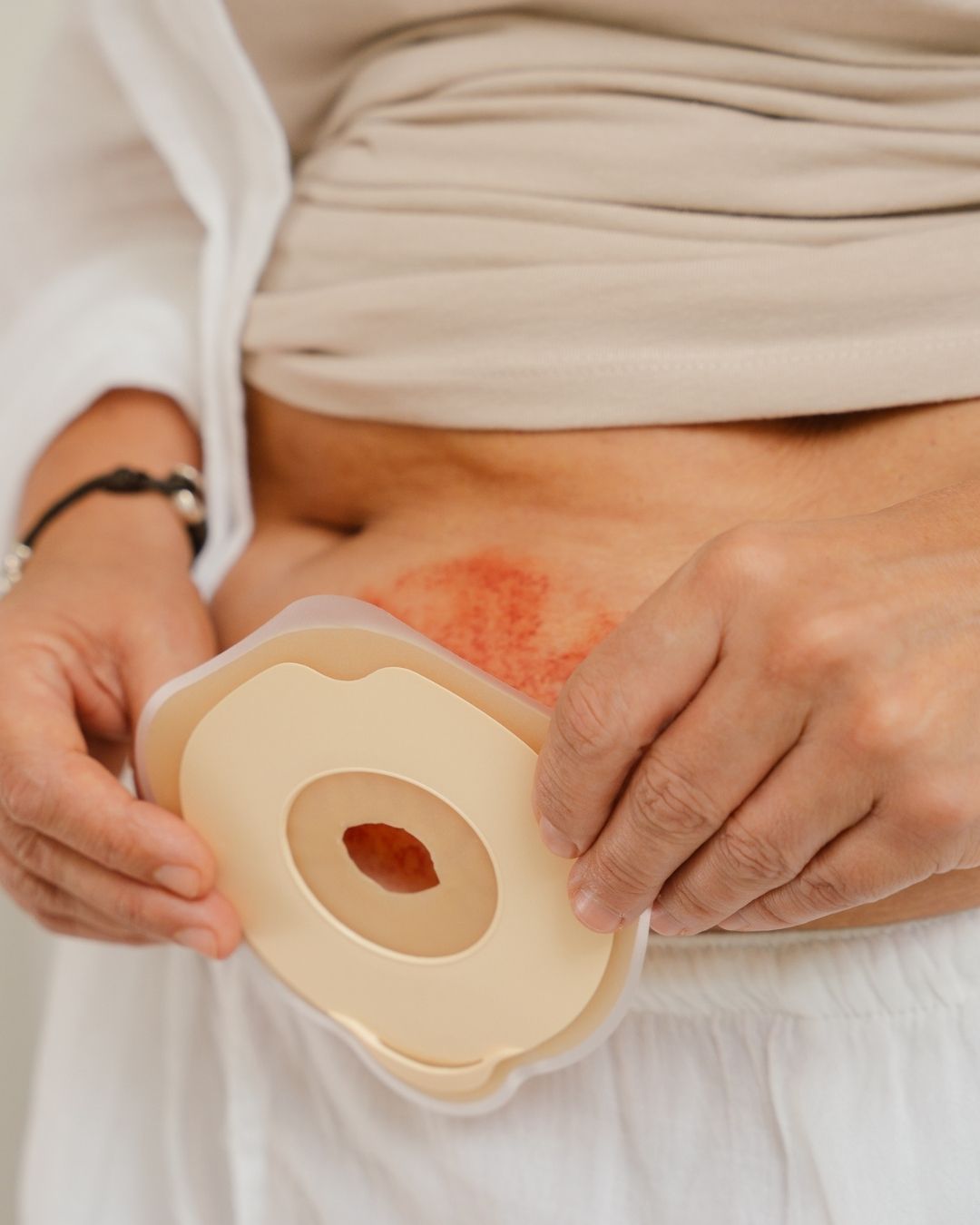
Sweat or trapped water can soften the skin and cause it to break down more easily. Warm, moist areas around the stoma can lead to yeast or bacterial infections, which may cause redness, itching, small bumps, or discomfort.
Strong soaps or scrubbing the skin around your stoma too hard can damage the skin and make it more sensitive.
Stoma changes such as telescoping, retraction, or other alterations can cause skin irritation.
Some illnesses, like Crohn’s disease or certain skin conditions, can also cause wounds or irritation around the stoma.
When you have leakage of your stoma output, it can quickly cause skin irritation. Once the skin becomes damaged, it’s harder for the baseplate to stick properly, which can lead to even more leakage and further irritation. If you notice any skin problems, contact your stoma nurse right away: early support can help prevent complications and keep your skin healthy.

Good skin hygiene and paying attention to early signs of irritation is the best way to prevent skin irritation complications. Healthy skin around the stoma helps ensure a secure, comfortable fit for your stoma bag. Redness, irritation, small wounds or pain, should never be ignored — they need proper care and timely attention.
Everyone’s skin is different, so your stoma nurse is the best person to guide you on what will work best for you. These are general tips and recommendations that many people find helpful:
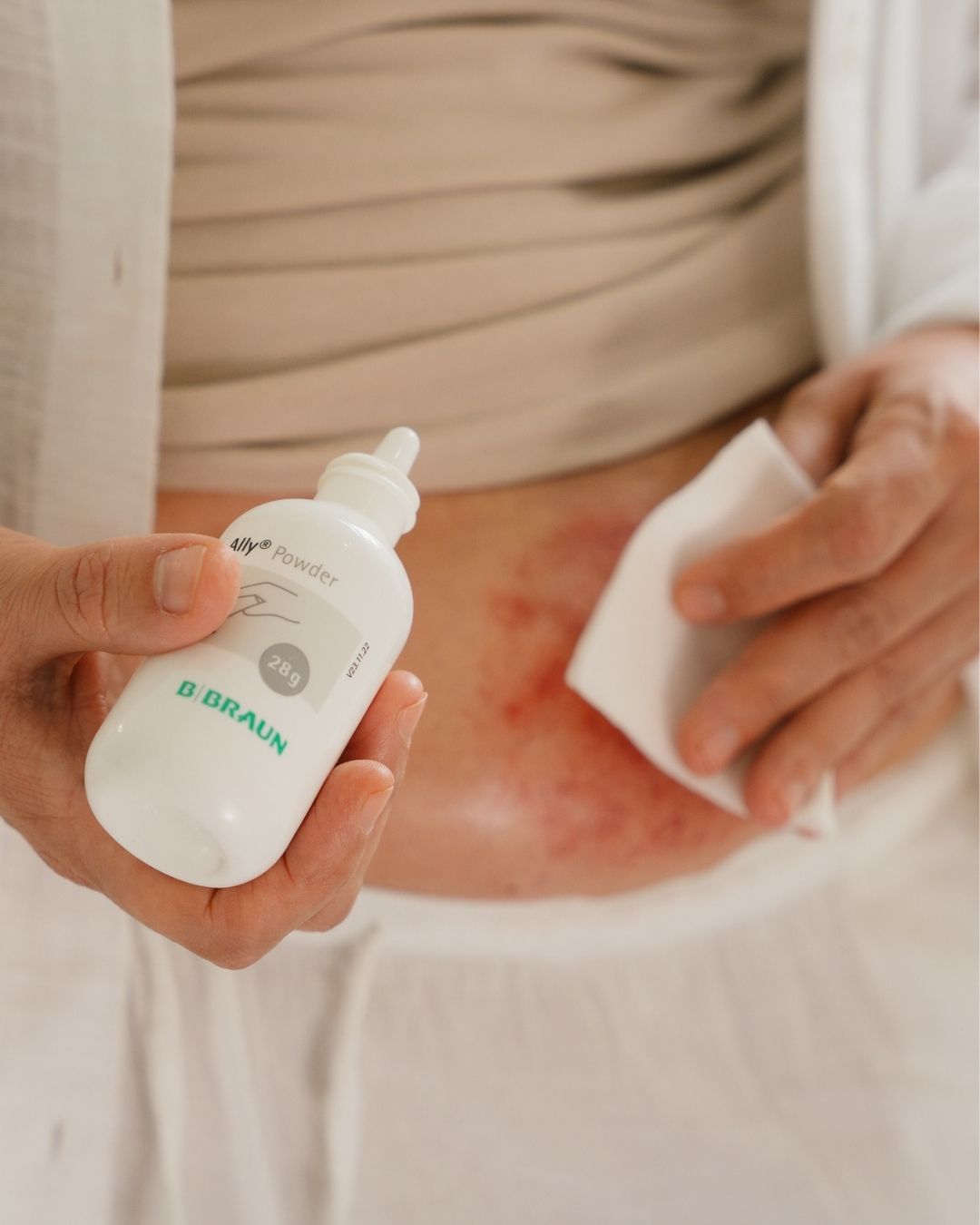
Wash the skin around the stoma with lukewarm water and a mild, fragrance-free soap. Stay away from harsh soaps, creams, or products that contain alcohol or oils, as they can damage sensitive skin. Also avoid scrubbing or rubbing the area.
Dry skin helps your baseplate stick better and reduces the chance of leaks. After showering or bathing with your bag on, gently pat dry the skin and the bag system, using a soft towel, but avoid rubbing, which can cause irritation. Some people also find products like Ally Powder useful.
A barrier spray, such as Ally Barrier Film Spray, can create a thin layer that helps protect your skin from irritation.
Pulling the baseplate off too harshly or too often can irritate or damage the skin. An adhesive remover, such as Ally Adhesive Remover, can make removal easier and more comfortable.
Products like Ally Paste or Ally Rings can help create a better seal and protect the skin from contact with stool or urine.
A barrier spray, such as Ally Barrier Film Spray, can create a thin layer that helps protect your skin from irritation.
Learn more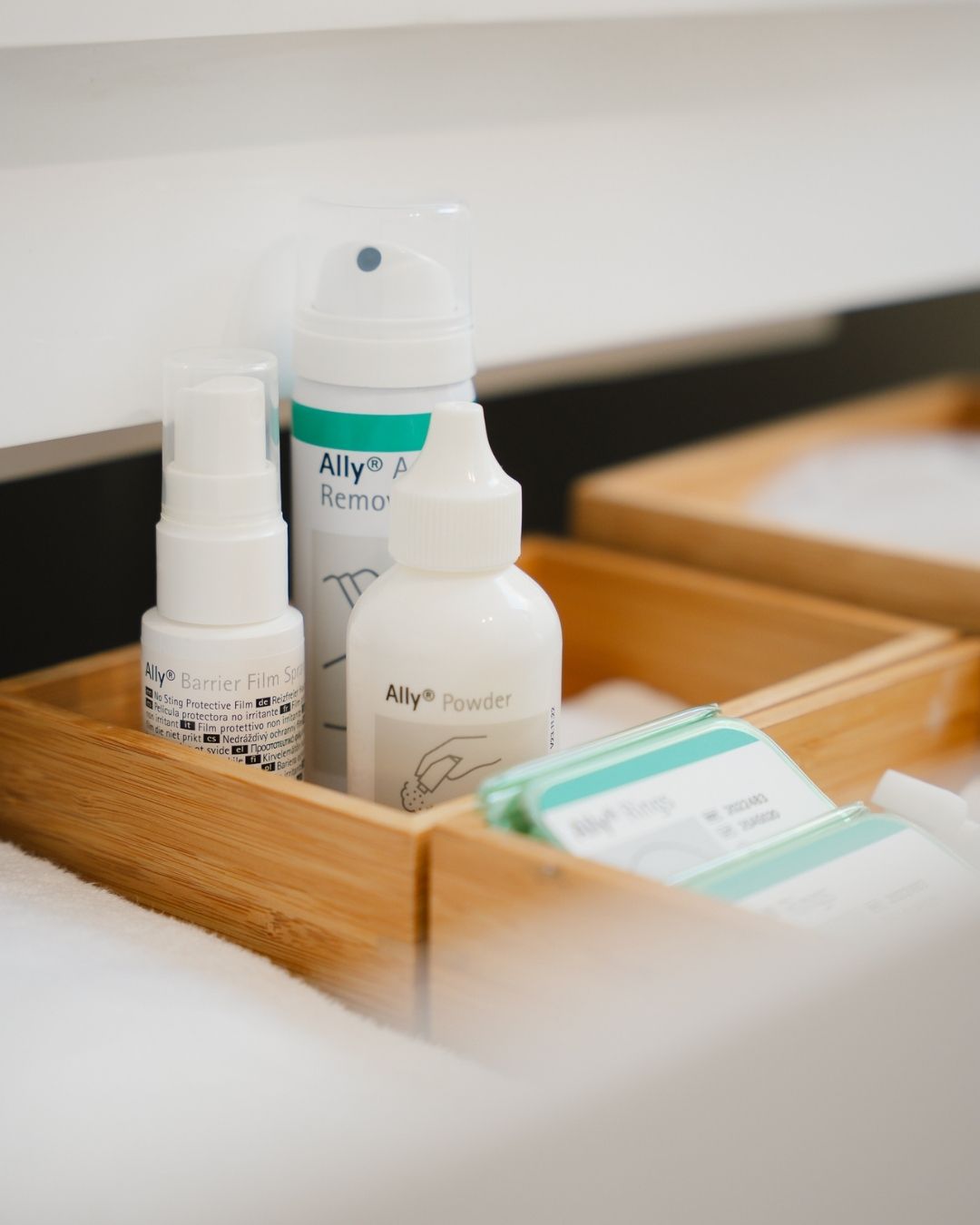
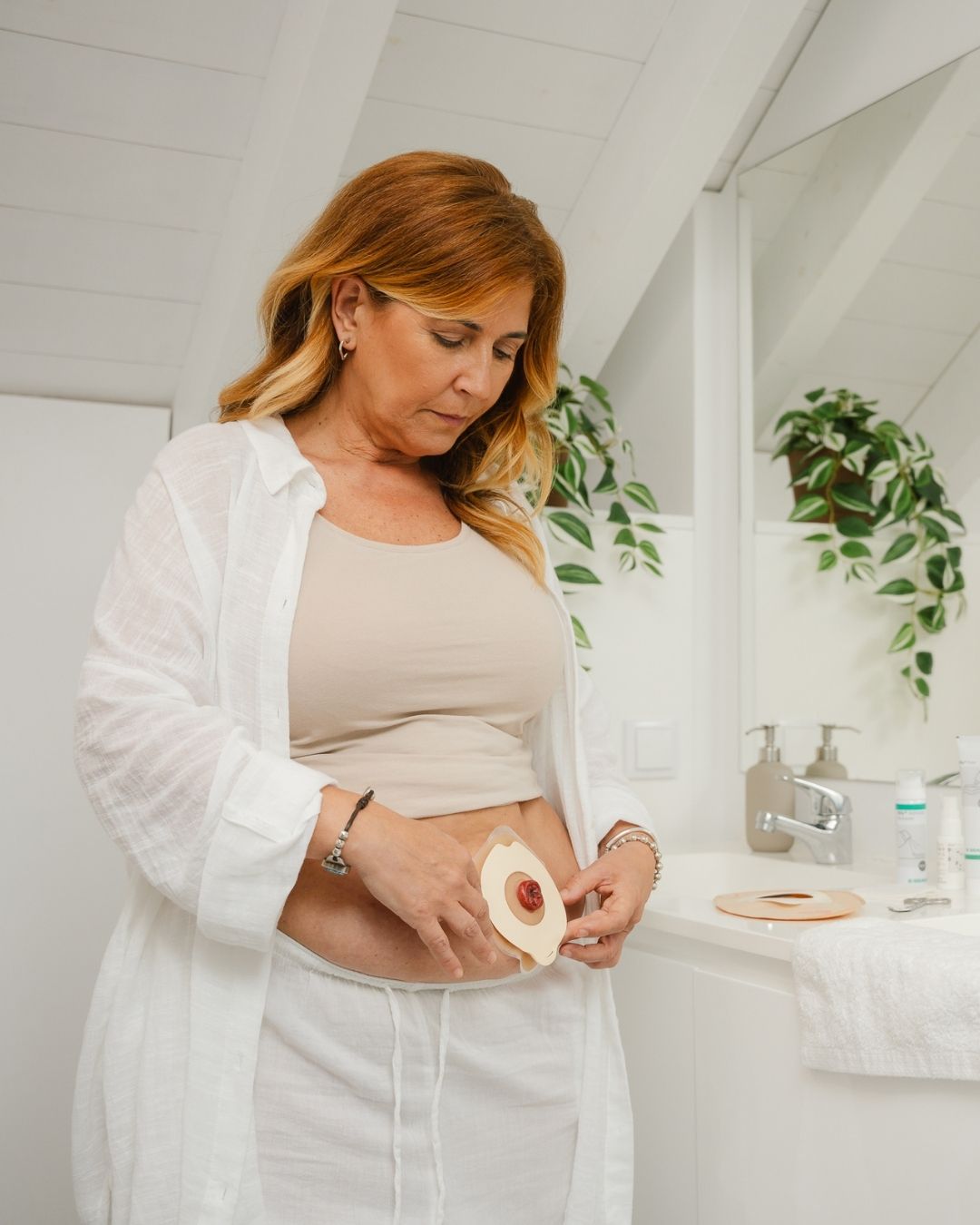
Knowing how to choose the right stoma bag is important. Your stoma nurse can check whether your current system matches the size and shape of your stoma. If you’re using a flat baseplate and still are having issues, a convex bag might be a better option.
With a two‑piece setup, the baseplate stays on your skin for several days while you only change the bag. This can be gentler if your skin is sensitive.
Look for stoma bags and baseplates designed to be gentle on the skin that could best suit your lifestyle and personal needs.
Learn morePrevention first: healthy skin around the stoma is key to ensuring a secure and comfortable fit for your stoma bag.

You should use a mild, fragrance-free soap. Avoid harsh or alcohol-based products, which can damage sensitive skin.
It’s best to inspect the skin every time you change your baseplate. Early signs of irritation are easier to treat.
You might notice redness, itching, burning, or small cuts around the stoma. The skin may feel sore, look shiny, or be starting to peel. If your pouch doesn’t stick well or leaks more than usual, it could also be a sign of irritation. If you are uncertain, it’s best to contact your stoma nurse for advice and support.
Your feedback matters! Participate in our customer survey to help us enhance our website, products and services. Thank you for your support!


