
Flush stoma
A stoma should protrude about 2.5 cm above surrounding skin, so the seal around the base of the stoma can work well. If it sits at abdominal skin level, it is considered flush and leakage may occur.

You have successfully logged out.


Not registered yet?
Preventing stoma leakage
You're not alone! Leakage is one of the most common challenges for people living with a stoma. When stool or urine leak onto the skin, it can feel uncomfortable, stressful and may lead to irritation if not managed early. The good news is that most causes of leakage can be identified and corrected with the right support and adjustments to your routine. Discover helpful tips here.

0%
of people with a stoma may experience leakage during their lifetime.1
Up to
0%
of the people with a stoma can be affected by skin problems around the stoma.2
More than
0%
of people with a stoma constantly worry about leakage.3
Stoma leakage
Leakage can happen for several different reasons, and most of them come down to how well the stoma appliance fits and how your skin behaves. Regardless of the cause, the effects are often the same: skin irritation and damage, sore spots, pain, reduced adhesiveness, more leakage, and a growing sense of insecurity. All this can impact the health of your skin, your mobility, and your overall well-being.
Here are some of the most common causes of stoma leakage:
If the hole in the baseplate is too big, too small, or no longer matches your stoma’s shape or size, small gaps can allow leakage.
Over time your stoma may become smaller, larger, or change shape (especially in the first months after surgery). This can affect how well your appliance fits as well as the seal of your stoma bag.
Natural skin folds, creases, wrinkles and flabby abdominal skin, can prevent the baseplate from sitting flat, creating tiny spaces where leakage can start.
Sweat, water, or oily skin can weaken the adhesive and make it harder for the baseplate to stay securely in place.
People with a high-output stoma typically have very fluid output which can seep under the base plate more easily.
If the stoma bag doesn’t suit your body shape or stoma type, it may not create a reliable seal and allow leakage to occur.
When the baseplate starts to lift or is left on too long, leakage can seep underneath.
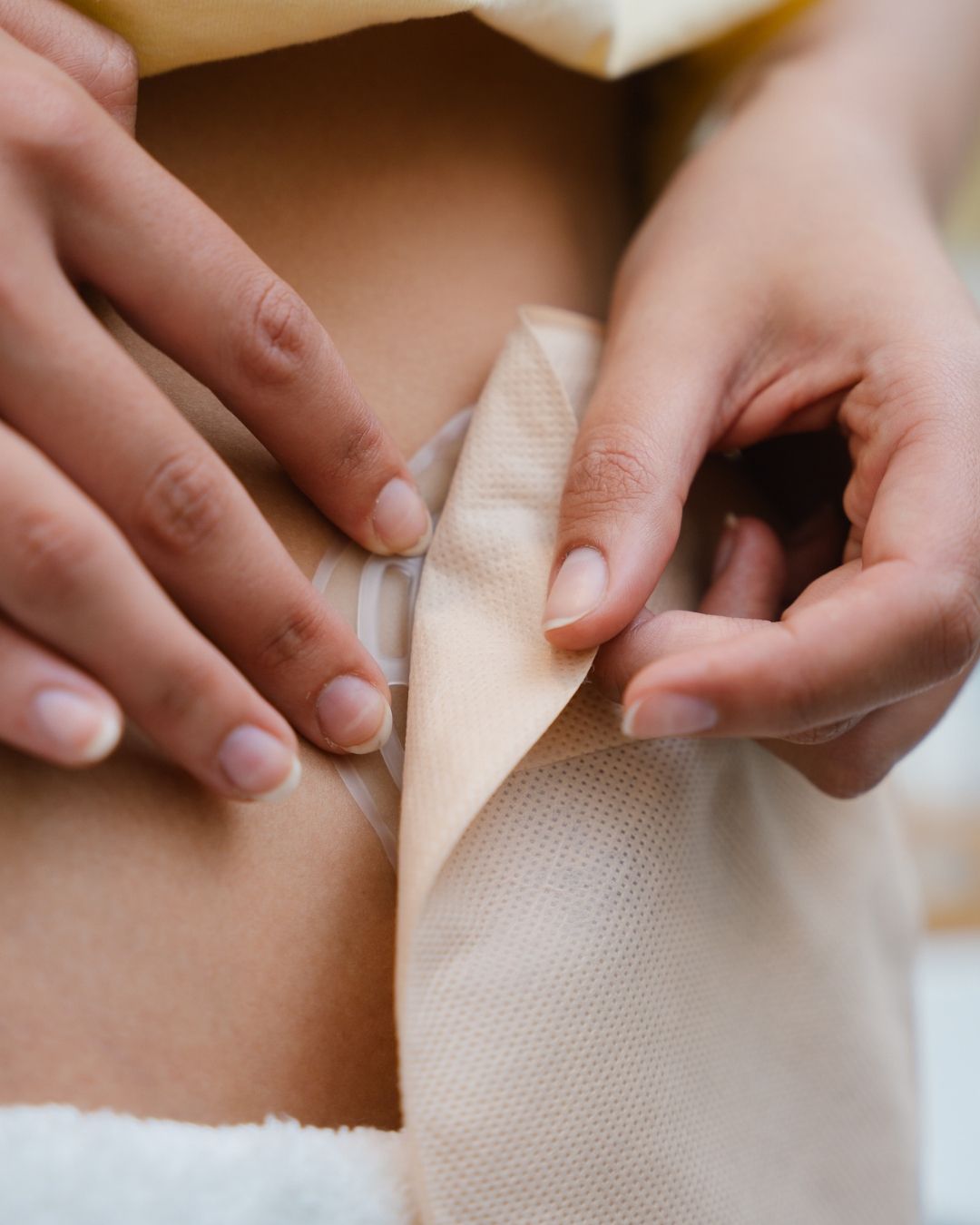
Additionally, depending on the type of stoma and belly you might be more likely to have leakage:
A stoma should protrude about 2.5 cm above surrounding skin, so the seal around the base of the stoma can work well. If it sits at abdominal skin level, it is considered flush and leakage may occur.

This can happen for several reasons. Sometimes it’s due to challenges during the surgery or can it develop later, for example after gaining weight.

A telescoping stoma can slide inward, especially at night when you’re lying down. It may move closer to surrounding skin level or dip slightly below it. This is common and can vary moment to moment.

If a stoma was created during an emergency surgery and your abdomen was swollen, it might not have been possible to place it in the most ideal position.

The skin can form small, channel‑like folds that guide stool or urine under the baseplate, which may lead to leakage.

If the abdominal muscles are weak, the stoma has less support. This can cause dips, folds, or uneven areas around the stoma, which may affect how well the appliance fits.

A stoma with a large amount of output can make leakage more likely. If it produces over about 750 millimiters a day or if the output is very liquid, it can be harder to keep the appliance in place.
In these situations, a regular wafer may not fit well enough or seal properly around your stoma.
When that happens, a stoma bag with a convex wafer that gently curves toward the skin can offer better support. This shape helps the stoma stick out more, which can improve the seal and reduce the risk of leakage.
Choosing the right stoma bag can make a big difference in your daily comfort and confidence.
Leakage can lead to skin irritation, making you uncomfortable and having a real impact onyour quality of life3. Once the skin becomes irritated, adhesion tends to weaken, increasingthe risk of even more leakage. This creates a vicious circle where leaks cause skinproblems, and skin problems make leaks more likely, affecting your comfort andconfidence day‑to‑day.

Tips to avoid leakage
Avoiding leakage is mostly about getting the right fit, protecting the skin, and making sure thestoma bag stays securely in place. Your stoma nurse will help you to avoid leakage. Smalladjustments can make a big difference and remember: Skin integrity is key in stoma care!
Here are some frequently given recommendations:
Measure your stoma regularly, especially in the first months after surgery. Cut or choose an opening thatmatches your stoma’s size and shape as closely as possible.
Clean the skin gently with warm water. Dry the area completely before applying the baseplate.
Use accessories like rings or pastes to fill dips or creases. Consider a convex baseplate if your stoma isflush or retracted. We suggest checking with your stoma nurse to see if a convex baseplate is the rightchoice for you.
Different adhesives, baseplate shapes, and levels of flexibility work better for different body types. Astoma nurse can help identify the best option for your lifestyle, abdomen and stoma type.
Don’t wait until the baseplate starts lifting. Establish a routine changing schedule that works for youroutput type.
If your stoma output is very liquid or you produce a large volume, this can make it harder to get a properseal. There are special products designed for high‑output stomas that can help you feel more secure.
Certain dietary changes may also thicken your output, but it’s important to discuss this with your stomanurse first. (Link to high output solutions)
Press gently around the baseplate to ensure full contact with the skin. Warm the adhesive with yourhands for a few seconds to improve adhesion.
With the right care, the right products, and the right support, you can feel confident, comfortable, and fully in control of your everyday life.

Not necessarily. Occasional leakage is common, especially early on, but should not be ignored. However, frequent or sudden changes in leakage can signal that your stoma or skin has changed, and it’s often a signal that your setup needs to be adjusted. If you experience stoma leakage, you should consult your stoma care nurse to find a solution.
There’s no single rule. It depends on your stoma type, output, and the products you use. Sticking to a regular routine usually helps prevent leaks. If you’re dealing with leakage or irritation, try not to change your bag too often, because frequent changes can make the skin more sensitive, which can actually lead to more leaks. In some cases, a two-piece system might be a good solution, but it’s best to evaluate this with your stoma nurse.
Leaks can happen, even with good routines. Having an emergency kit, with a few supplies on hand can help you feel prepared and protected in any situation.
Yes. Different stoma shapes and skin types benefit from different stoma bags, rings, and adhesives. A stoma care nurse can help match you with products that reduce leakage and protect your skin.
Evans M, White P. Selecting convexity to improve and maintain peristomal skin integrity. Br J Nurs. 2020 Sep 10;29(16):S8-S14. doi: 10.12968/bjon.2020.29.16.S8.PMID: 32901550.
Andersen NK, Trøjgaard P, Herschend NO, Størling ZM. Automated Assessment of Peristomal Skin Discoloration and Leakage Area Using Artificial Intelligence.Front Artif Intell. 2020 Sep 10;3:72. doi: 10.3389/frai.2020.00072. PMID: 33733189; PMCID: PMC7861335
Nafees B, Størling ZM, Hindsberger C, Lloyd A. The ostomy leak impact tool: development and validation of a new patient-reported tool to measure the burden ofleakage in ostomy device users. Health Qual Life Outcomes. 2018 Dec 14;16(1):231. doi: 10.1186/s12955-018-1054-0. PMID: 30547808; PMCID: PMC6295083.
Your feedback matters! Participate in our customer survey to help us enhance our website, products and services. Thank you for your support!


