You have successfully logged out.

Hello !
Logout

Stop pressure ulcer formation

Time to focus on pressure ulcer prevention

We all want to avoid pressure ulcers. Considerable progress has been made in this area the past few years. Nevertheless, pressure ulcers remain a challenge. B. Braun offers different solutions including products for skin care and skin protection. Taking action right from the start can help you to protect your patients from pressure ulcers.[1]
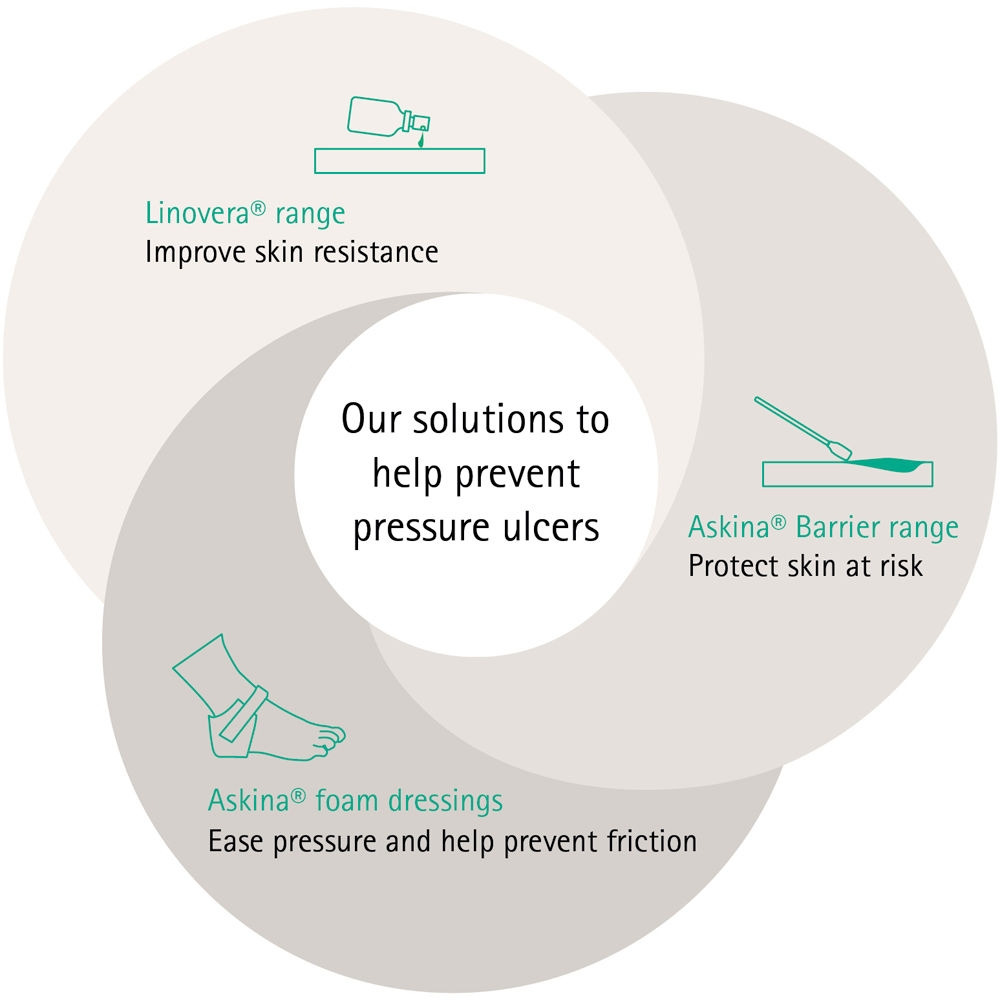
Illustration: B. Braun solutions to help prevent pressure ulcers
  • Up to

    0%

    of hospital acquired pressure ulcers are preventable.[1]


illustration: spread awareness
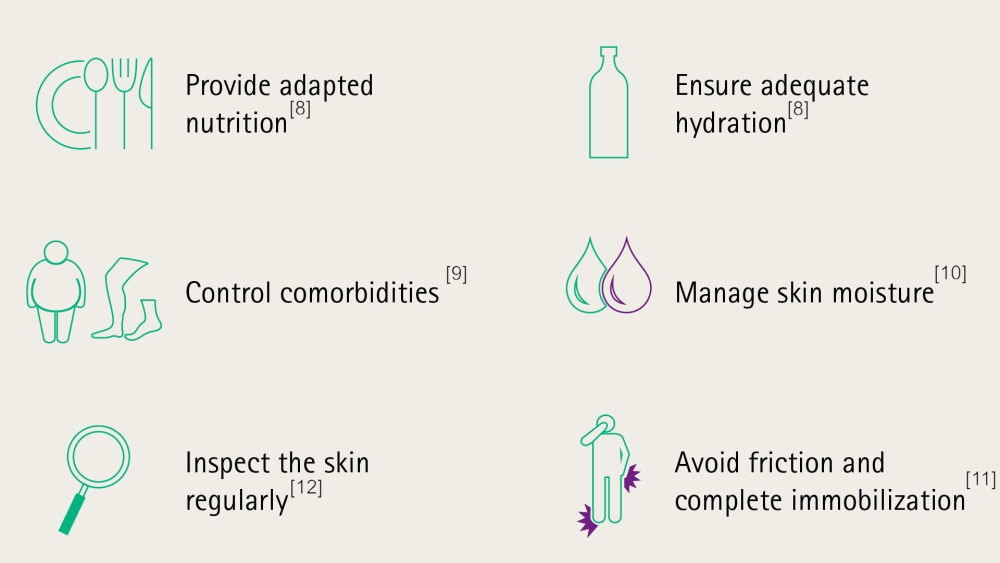
illustrations: measures to prevent pressure ulcers

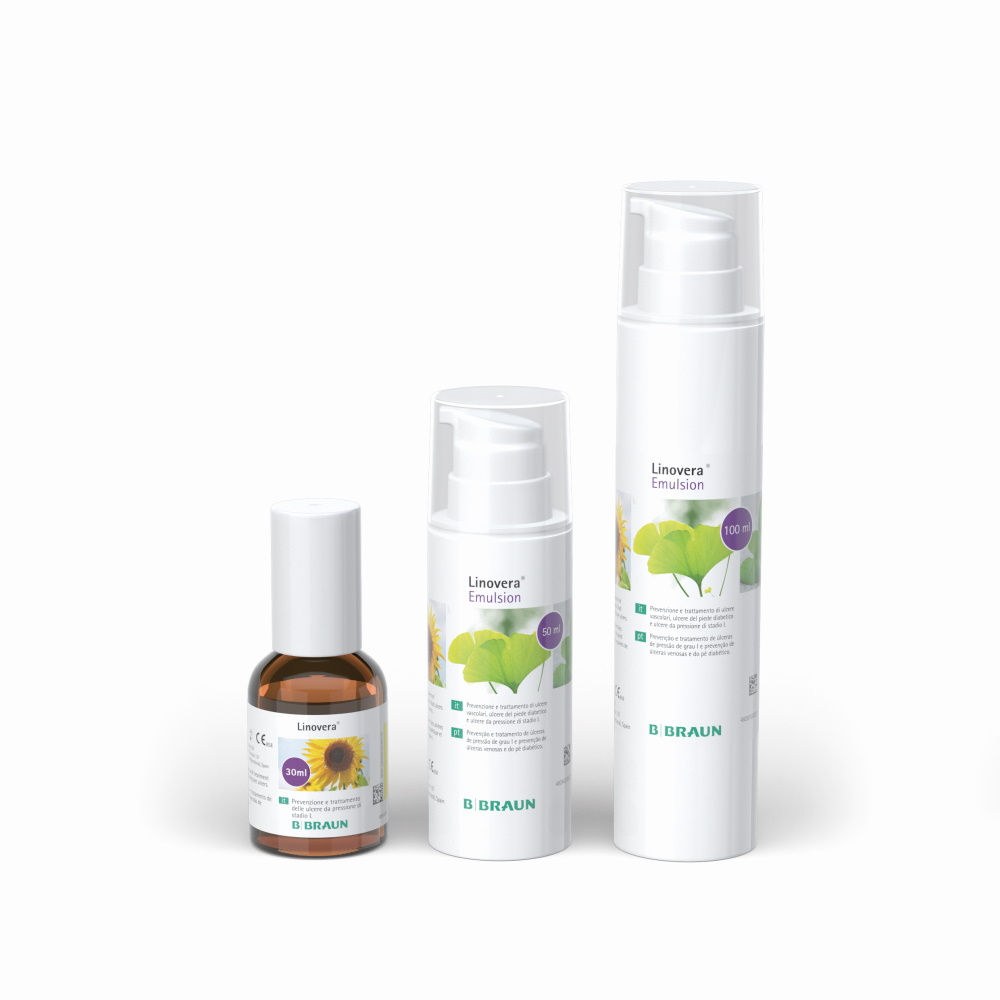
Linovera skin care portfolio

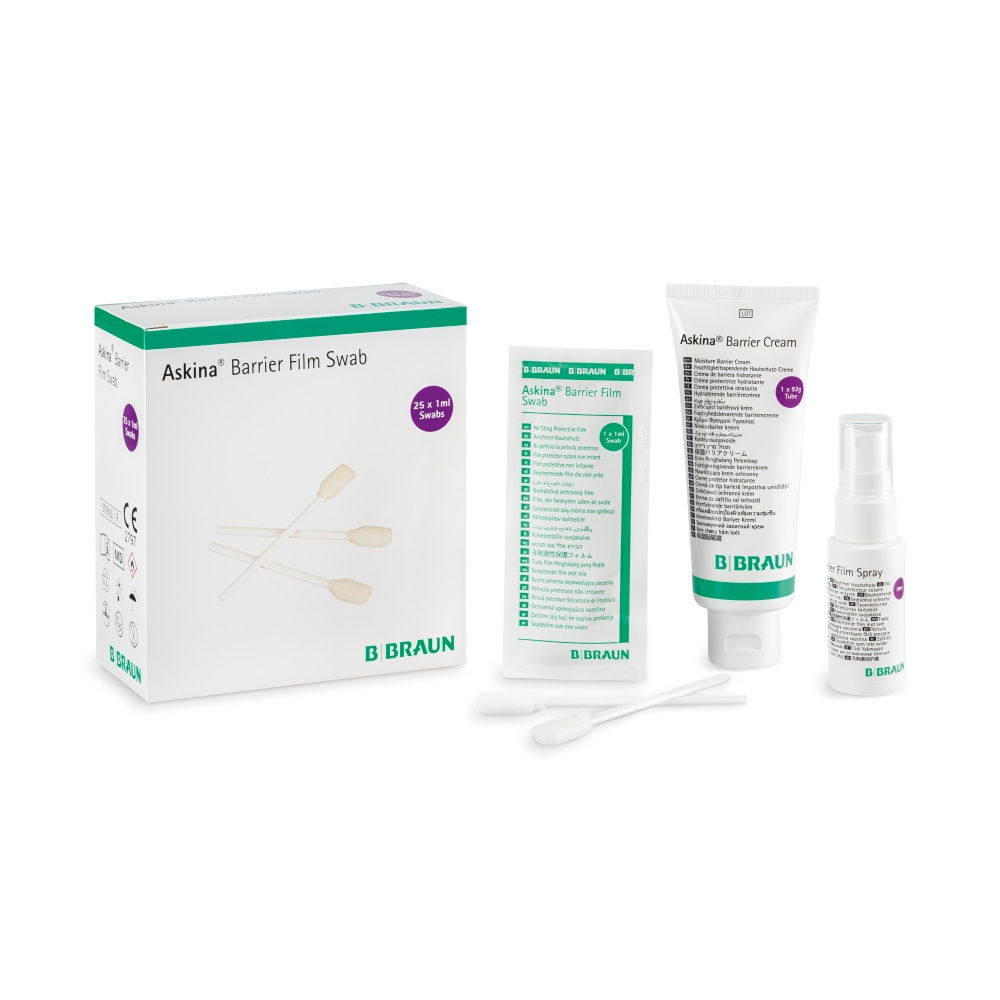
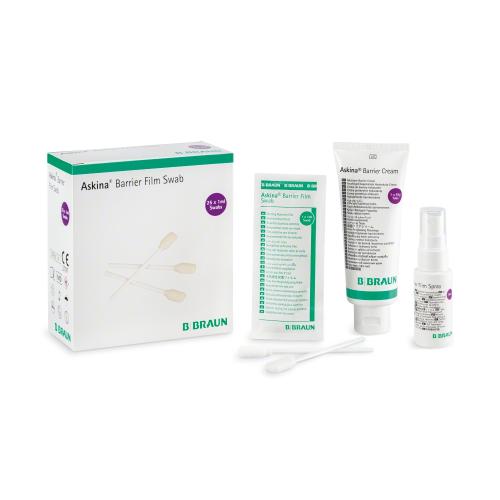
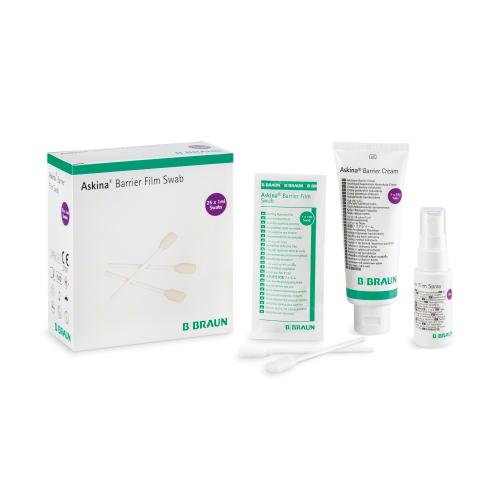
Askina Barrier skin protection portfolio

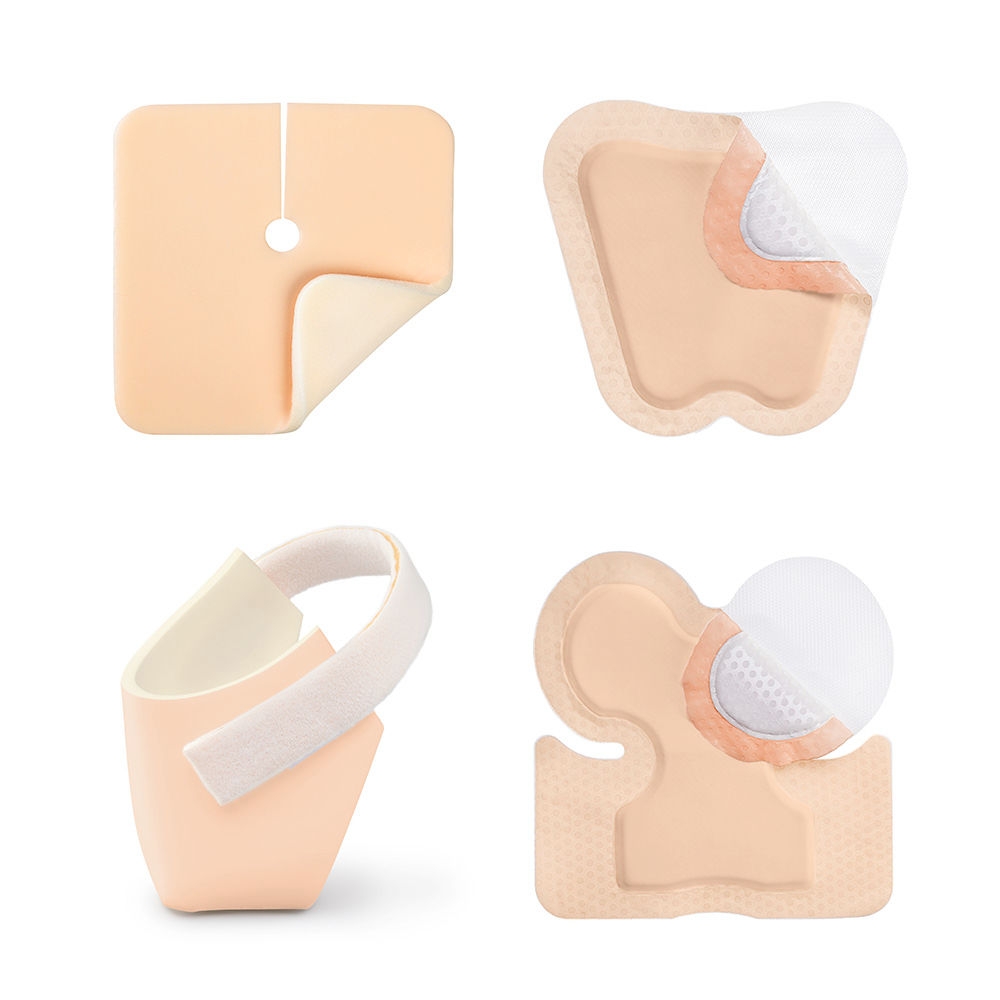
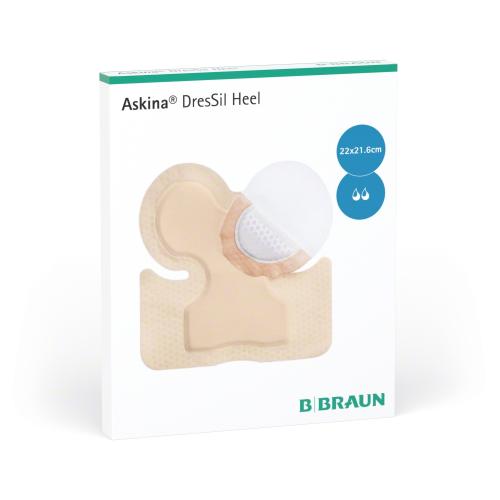
Askina Heel dressing portfolio

Askina DresSil dressing portfolio
The impact a pressure ulcer can have on a person's life
Miguel Jopia Cuevas Pressure ulcer

More information about our products

Linovera®

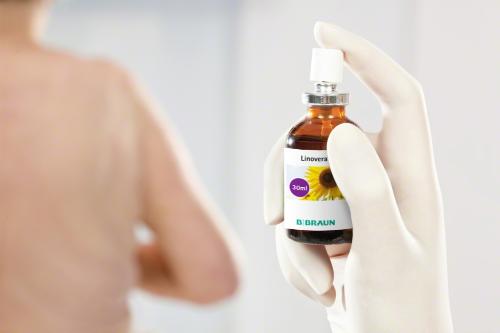
Chronic wounds are a major global medical concern,1 significantly impacting patients’ quality of life,2 while also affecting close family and relatives. Chronic wounds also cause considerable financial burden3 on the healthcare system and society.Topical preventive measures such as Linovera® oil are needed to avoid higher healthcare expenditures and preserve patients’ health. They can be used with the goal of promoting integrity of the skin and providing essential moisturizing.4HOFA-containing topical formulations have become an ideal therapeutic option that is part of the clinical protocols for nursing action in the prevention and treatment of ulcers.5 Linovera® is a skin care oil composed of: Hyperoxygenated fatty acids (HOFA) originated from sunflower oil naturally rich in linoleic acid,6 an essential fatty acid important in the maintenance of epidermal integrity and the natural skin’s water barrier.7 Some of the HOFA properties can increase skin resistance, reduce dehydration, reduce friction and pressure forces8 and improve microcirculation.9Vegetable extracts formulated to provide additional benefits such as skin conditioning, humectant, and tonic, enhancing the activity of the product. Thanks to its content of HOFA and vegetable extracts, Linovera® oil can be useful in the prevention of skin breakdown (e.g. prevention of stage 1 pressure ulcers) or in the management of already impaired skin,8,10 helping to provide the best care for your patients. CompositionHyperoxygenated fatty acids derived from sunflower oil (emollient)Aloe Barbadensis extract (skin conditioning, emollient, humectant)Asian Centella oil extract (skin conditioning, skin tonic, soothing agent)Rosemary essential oil (organoleptic) IndicationsLinovera® oil is indicated: For patients whose skin integrity is at riskFor prevention of pressure ulcers, vascular ulcers and diabetic foot ulcersFor treatment of stage 1 pressure ulcers

Linovera® Emulsion

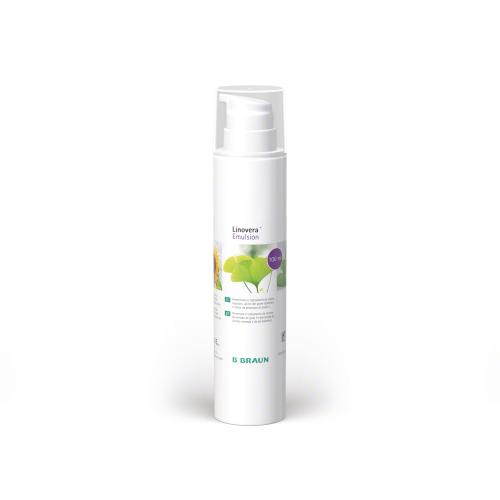
Chronic wounds are a major global medical concern,1 significantly impacting patients’ quality of life,2 while also affecting close family and relatives. Chronic wounds also cause considerable financial burden3 on the healthcare system and society.Topical preventive measures such as Linovera® Emulsion are needed to avoid higher healthcare expenditures and preserve patients’ health. They can be used with the goal of promoting integrity of the skin and providing essential moisturizing.4HOFA-containing topical formulations have become an ideal therapeutic option that is part of the clinical protocols for nursing action in the prevention and treatment of ulcers.5Linovera® Emulsion is a light emulsion moisturizing cream composed of:Hyperoxygenated fatty acids (HOFA) originated from sunflower oil naturally rich in linoleic acid,6 an essential fatty acid important in the maintenance of epidermal integrity and the natural skin’s water barrier.7 Some of the HOFA properties can increase skin resistance, reduce dehydration, reduce friction and pressure forces8 and improve microcirculation.9  Vegetable extracts formulated to provide additional benefits such as skin conditioning, humectant and tonic, enhancing the activity of the product.How Linovera® Emulsion can be usedThanks to its content of HOFA and vegetable extracts, Linovera® Emulsion can be useful in the prevention of skin breakdown (e.g. pressure ulcers, vascular ulcers, and diabetic foot ulcers) or in the management of already impaired skin8,10 helping to provide the best care for your patients.With its creamy consistency, Linovera® Emulsion is easy to apply on large body areas, such as limbs and feet11.CompositionHyperoxygenated fatty acids derived from sunflower oil (emollient)Aloe Barbadensis extract (skin conditioning, emollient, humectant)Asian Centella oil extract (skin conditioning, skin tonic, soothing agent)Rosemary essential oil (organoleptic)Ginkgo biloba (skin conditioning)IndicationsLinovera® Emulsion is indicated: For patients whose skin integrity is at riskFor prevention of pressure ulcers, vascular ulcers and diabetic foot ulcersFor treatment of stage 1  pressure ulcersFor large skin surfaces, such as whole lower limbs

Askina® Barrier Cream

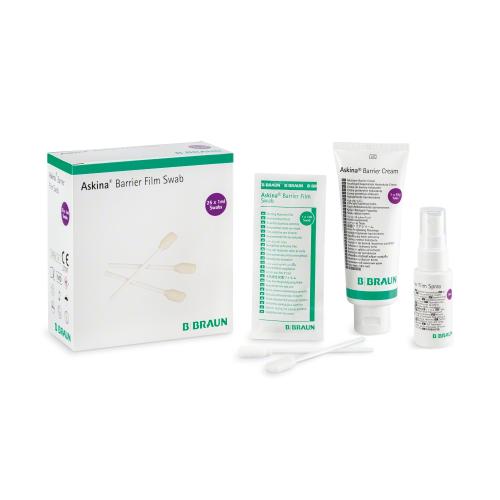
Askina® Barrier Cream is a white concentrated cream that provides protection to skin from body fluids. It protects dry, chafed, red, or irritated skin by moisturizing the skin and providing a long-lasting barrier.(1)

Ally® Barrier Film Spray

Ally® Barrier Film Spray is intended to prevent skin breakdown caused by moisture/stoma effluents, to protect peristomal skin at risk from maceration and excoriation and to maintain the integrity of newly healed skin to stop secondary skin breakdown. Ally® Barrier Film Spray is especially recommended for people with irritated or sensitive peristomal skin.

Askina® Barrier Film Swabs

Askina® Barrier Film Swabs are sterile foam applicators with a polymeric solution which offer between 48-72h of protection to intact or damaged skin. The non-stinging solvent forms a uniform film when applied to the skin. It is a multiple use device that is intended for single patient use.(1) 

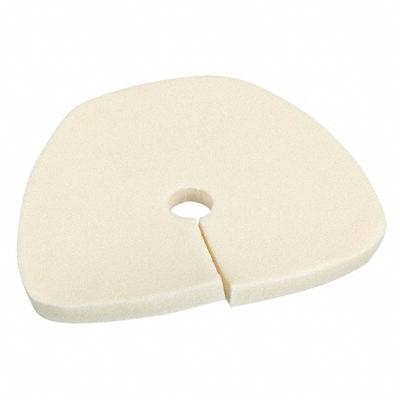
Askina® Trachea

Askina® Trachea is a polyurethane foam dressing with a circular aperture especially designed to fit neatly around a tracheostomy tube or other drain. The dressing absorbs wound exudate through the polyurethane foam and provides a moist wound environment that promotes wound healing. The outer vapor-permeable polyurethane film layer protects the wound from dirt and bacteria.Askina® Trachea is designed for a wide range of moderately to highly exuding wounds, mainly for exudate absorption at the tracheostomy site.

Askina® DresSil Active Heel

Askina® DresSil Active Heel is a heel multilayer silicone dressing with border designed to provide active exudate management. Its multilayer structure improves exudate retention and absorption while maintaining the adequate moisture level in the wound1. This may reduce the frequency of dressing changes, thereby saving nursing time and allowing more time to be dedicated to patients and their care2. Askina® DresSil Active Heel is designed for a wide range of exuding wounds such as:Pressure ulcersLeg and foot ulcersTraumatic wounds (e.g. skin tears)Surgical wounds It can also be used on dry/necrotic wounds in combination with gels. The dressing may also be used as part of a prophylactic therapy to help prevent skin damage, e.g. pressure ulcers. Material Askina® DresSil Active Heel, thanks to its multilayer structure, is designed to offer effective exudate management of chronic wounds: Layer 1: Semi-transparent film with 1 cm apart dots for the Active Exudate Monitoring SystemLayer 2: Superabsorbent layer to absorb and lock in exudateLayer 3: Exudate distribution layer to facilitate quick exudate movement from the foam to the superabsorbent layerLayer 4: Thin foam layer that enables vertical absorption while maintaining a moist environment conducive to wound healingLayer 5: Silicone layer to provide secure fixation while conforming to body contours

Askina® DresSil

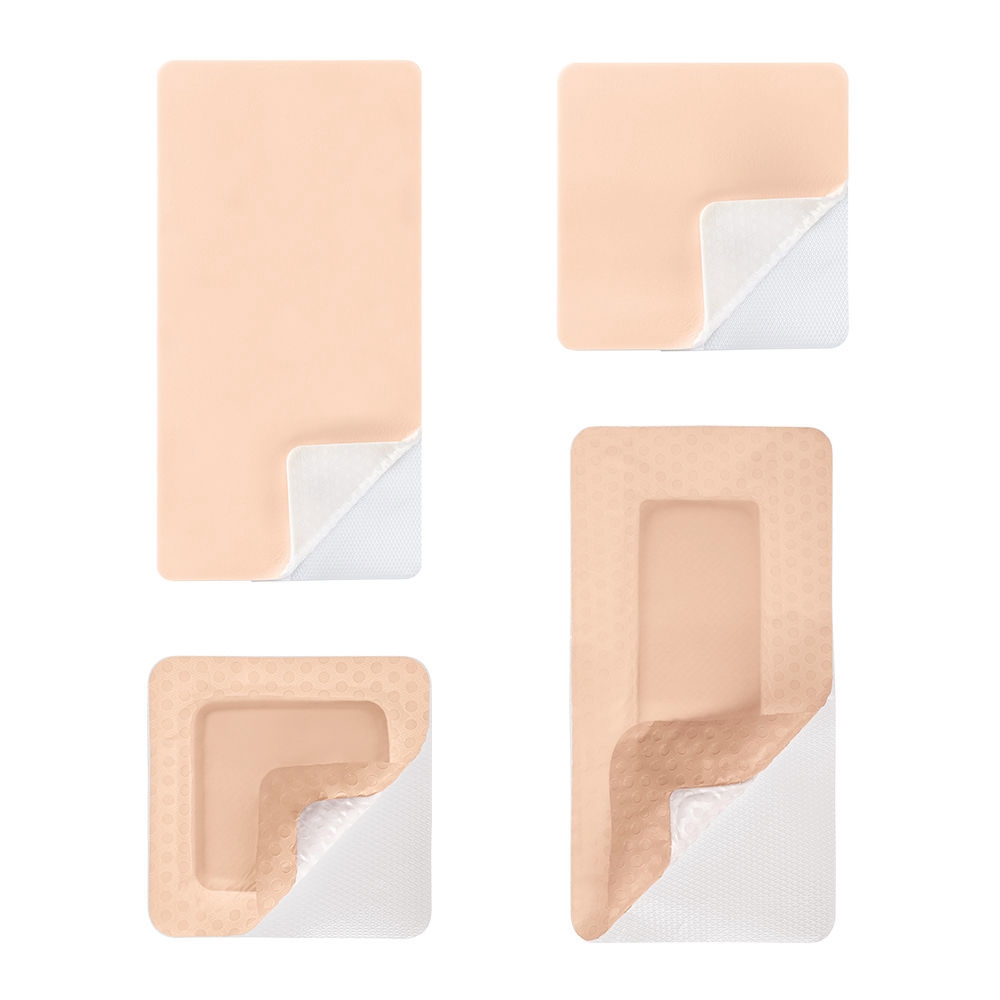
Askina® DresSil is a non-bordered, self-adherent soft silicone wound dressing. It absorbs exudate from the wound through silicone perforations and provides a moist wound healing environment to promote wound healing.  The wound contact layer made of silicone reduces pain and trauma during dressing changes, enhancing patient comfort. The waterproof outer layer protects the wound from dirt and bacteria. The soft polyurethane foam conforms to the natural contours of the body making the dressing comfortable to wear, while the waterproof outer layer protects the wound from dirt and bacteria. Askina® DresSil is designed for a wide range of exuding wounds, such as:  Leg and foot ulcersPressure ulcers  Traumatic wounds, e.g. skin tears  Secondary healing woundsMaterial  Askina® DresSil is composed of three layers:  Layer 1: Outer polyurethane filmLayer 2: Absorbent polyurethane foamLayer 3: Silicone adhesive 

Askina® DresSil Active

Askina® DresSil Active is a multilayer silicone dressing with border designed to provide active exudate management. Its multilayer structure improves exudate retention and absorption while maintaining the adequate moisture level in the wound1. This may reduce the frequency of dressing changes, thereby saving nursing time and allowing more time to be dedicated to patients and their care2.  Askina® DresSil Active is designed for a wide range of exuding wounds such as:Pressure ulcersLeg and foot ulcersTraumatic wounds (e.g. skin tears)Surgical wounds It can also be used on dry/necrotic wounds in combination with gels. The dressing may also be used as part of a prophylactic therapy to help prevent skin damage, e.g. pressure ulcers.

Skin resistance improvement and skin protection

Linovera®

Chronic wounds are a major global medical concern,1 significantly impacting patients’ quality of life,2 while also affecting close family and relatives. Chronic wounds also cause considerable financial burden3 on the healthcare system and society.Topical preventive measures such as Linovera® oil are needed to avoid higher healthcare expenditures and preserve patients’ health. They can be used with the goal of promoting integrity of the skin and providing essential moisturizing.4HOFA-containing topical formulations have become an ideal therapeutic option that is part of the clinical protocols for nursing action in the prevention and treatment of ulcers.5 Linovera® is a skin care oil composed of: Hyperoxygenated fatty acids (HOFA) originated from sunflower oil naturally rich in linoleic acid,6 an essential fatty acid important in the maintenance of epidermal integrity and the natural skin’s water barrier.7 Some of the HOFA properties can increase skin resistance, reduce dehydration, reduce friction and pressure forces8 and improve microcirculation.9Vegetable extracts formulated to provide additional benefits such as skin conditioning, humectant, and tonic, enhancing the activity of the product. Thanks to its content of HOFA and vegetable extracts, Linovera® oil can be useful in the prevention of skin breakdown (e.g. prevention of stage 1 pressure ulcers) or in the management of already impaired skin,8,10 helping to provide the best care for your patients. CompositionHyperoxygenated fatty acids derived from sunflower oil (emollient)Aloe Barbadensis extract (skin conditioning, emollient, humectant)Asian Centella oil extract (skin conditioning, skin tonic, soothing agent)Rosemary essential oil (organoleptic) IndicationsLinovera® oil is indicated: For patients whose skin integrity is at riskFor prevention of pressure ulcers, vascular ulcers and diabetic foot ulcersFor treatment of stage 1 pressure ulcers

Linovera® Emulsion

Chronic wounds are a major global medical concern,1 significantly impacting patients’ quality of life,2 while also affecting close family and relatives. Chronic wounds also cause considerable financial burden3 on the healthcare system and society.Topical preventive measures such as Linovera® Emulsion are needed to avoid higher healthcare expenditures and preserve patients’ health. They can be used with the goal of promoting integrity of the skin and providing essential moisturizing.4HOFA-containing topical formulations have become an ideal therapeutic option that is part of the clinical protocols for nursing action in the prevention and treatment of ulcers.5Linovera® Emulsion is a light emulsion moisturizing cream composed of:Hyperoxygenated fatty acids (HOFA) originated from sunflower oil naturally rich in linoleic acid,6 an essential fatty acid important in the maintenance of epidermal integrity and the natural skin’s water barrier.7 Some of the HOFA properties can increase skin resistance, reduce dehydration, reduce friction and pressure forces8 and improve microcirculation.9  Vegetable extracts formulated to provide additional benefits such as skin conditioning, humectant and tonic, enhancing the activity of the product.How Linovera® Emulsion can be usedThanks to its content of HOFA and vegetable extracts, Linovera® Emulsion can be useful in the prevention of skin breakdown (e.g. pressure ulcers, vascular ulcers, and diabetic foot ulcers) or in the management of already impaired skin8,10 helping to provide the best care for your patients.With its creamy consistency, Linovera® Emulsion is easy to apply on large body areas, such as limbs and feet11.CompositionHyperoxygenated fatty acids derived from sunflower oil (emollient)Aloe Barbadensis extract (skin conditioning, emollient, humectant)Asian Centella oil extract (skin conditioning, skin tonic, soothing agent)Rosemary essential oil (organoleptic)Ginkgo biloba (skin conditioning)IndicationsLinovera® Emulsion is indicated: For patients whose skin integrity is at riskFor prevention of pressure ulcers, vascular ulcers and diabetic foot ulcersFor treatment of stage 1  pressure ulcersFor large skin surfaces, such as whole lower limbs

Askina® Barrier Cream

Askina® Barrier Cream is a white concentrated cream that provides protection to skin from body fluids. It protects dry, chafed, red, or irritated skin by moisturizing the skin and providing a long-lasting barrier.(1)

Ally® Barrier Film Spray

Ally® Barrier Film Spray is intended to prevent skin breakdown caused by moisture/stoma effluents, to protect peristomal skin at risk from maceration and excoriation and to maintain the integrity of newly healed skin to stop secondary skin breakdown. Ally® Barrier Film Spray is especially recommended for people with irritated or sensitive peristomal skin.

Askina® Barrier Film Swabs

Askina® Barrier Film Swabs are sterile foam applicators with a polymeric solution which offer between 48-72h of protection to intact or damaged skin. The non-stinging solvent forms a uniform film when applied to the skin. It is a multiple use device that is intended for single patient use.(1) 

References

  1. Chaboyer W, Bucknall T, Webster J, McInnes E, Gillespie BM, Banks M, Whitty JA, Thalib L, Roberts S, Tallott M, Cullum N, Wallis M. The effect of a patient centred care bundle intervention on pressure ulcer incidence (INTACT): A cluster randomised trial. Int J Nurs Stud. 2016 Dec;64:63-71. doi: 10.1016/j.ijnurstu.2016.09.015. Epub 2016 Sep 23.
  2. Labeau SO, Afonso E, Benbenishty J, Blackwood B, Boulanger C, Brett SJ, Calvino-Gunther S, Chaboyer W, Coyer F, Deschepper M, François G, Honore PM, Jankovic R, Khanna AK, Llaurado-Serra M, Lin F, Rose L, Rubulotta F, Saager L, Williams G, Blot SI; DecubICUs Study Team; European Society of Intensive Care Medicine (ESICM) Trials Group Collaborators. Prevalence, associated factors and outcomes of pressure injuries in adult intensive care unit patients: the DecubICUs study. Intensive Care Med. 2021 Feb;47(2):160-169. doi: 10.1007/s00134-020-06234-9. Epub 2020 Oct 9. Erratum in: Intensive Care Med. 2021 Apr;47(4):503-520. PMID: 33034686; PMCID: PMC7880913.
  3. Gefen A. How much time does it take to get a pressure ulcer? Integrated evidence from human, animal, and in vitro studies. Ostomy Wound Manage. 2008 Oct;54(10):26-8, 30-5. PMID: 18927481.
  4. Graves N, Weinhold D, Tong E, Birrell F, Doidge S, Ramritu P, Halton K, Lairson D, Whitby M. Effect of healthcare-acquired infection on length of hospital stay and cost. Infect Control Hosp Epidemiol. 2007 Mar;28(3):280-92. doi: 10.1086/512642. Epub 2007 Feb 20. PMID: 17326018.
  5. Sebba Tosta de Souza DM, Veiga DF, Santos ID, Abla LE, Juliano Y, Ferreira LM. Health-Related Quality of Life in Elderly Patients With Pressure Ulcers in Different Care Settings. J Wound Ostomy Continence Nurs. 2015 Jul-Aug;42(4):352-9. doi: 10.1097/WON.0000000000000142. PMID: 26135820.
  6. Demarré L, Van Lancker A, Van Hecke A, Verhaeghe S, Grypdonck M, Lemey J, Annemans L, Beeckman D. The cost of prevention and treatment of pressure ulcers: A systematic review. Int J Nurs Stud. 2015 Nov;52(11):1754-74. doi: 10.1016/j.ijnurstu.2015.06.006. Epub 2015 Jun 25. PMID: 26231383.
  7. European Pressure Ulcer Advisory Panel, National Pressure Injury Advisory Panel, and Pan Pacific Pressure Injury Alliance. Prevention and Treatment of Pressure Ulcers/Injuries: Clinical Practice Guideline. The International Guideline. 3rd ed. Haesler E, ed. 2019. http://internationalguideline.com. Last accessed December 27, 2019.
  8. Munoz N, Posthauer ME, Cereda E, Schols JMGA, Haesler E. The Role of Nutrition for Pressure Injury Prevention and Healing: The 2019 International Clinical Practice Guideline Recommendations. Adv Skin Wound Care. 2020 Mar;33(3):123-136. doi: 10.1097/01.ASW.0000653144.90739.ad. PMID: 32058438.
  9. Jaul E, Barron J, Rosenzweig JP, Menczel J. An overview of co-morbidities and the development of pressure ulcers among older adults. BMC Geriatr. 2018 Dec 11;18(1):305. doi: 10.1186/s12877-018-0997-7. PMID: 30537947; PMCID: PMC6290523.
  10. Yusuf S, Okuwa M, Shigeta Y, Dai M, Iuchi T, Rahman S, Usman A, Kasim S, Sugama J, Nakatani T, Sanada H. Microclimate and development of pressure ulcers and superficial skin changes. Int Wound J. 2015 Feb;12(1):40-6. doi: 10.1111/iwj.12048. Epub 2013 Mar 12. PMID: 23490303; PMCID: PMC7950852
  11. Gerhardt LC, Strässle V, Lenz A, Spencer ND, Derler S. Influence of epidermal hydration on the friction of human skin against textiles. J R Soc Interface. 2008 Nov 6;5(28):1317-28. doi: 10.1098/rsif.2008.0034. PMID: 18331977; PMCID: PMC2607440.
  12. Lavallée JF, Gray TA, Dumville J, Cullum N. Preventing pressure ulcers in nursing homes using a care bundle: A feasibility study. Health Soc Care Community. 2019 Jul;27(4):e417-e427. doi: 10.1111/hsc.12742. Epub 2019 Mar 27. PMID: 30919525; PMCID: PMC6618244.
  13. Voegeli D, Hillery S. Prevention and management of moisture-associated skin damage. Br J Nurs. 2021 Aug 12;30(15):S40-S46. doi: 10.12968/bjon.2021.30.15.S40. PMID: 34379461.
  14. Barakat-Johnson M, Lai M, Wand T, Li M, White K, Coyer F. The incidence and prevalence of medical device-related pressure ulcers in intensive care: a systematic review. J Wound Care. 2019 Aug 2;28(8):512-521. doi: 10.12968/jowc.2019.28.8.512. PMID: 31393800.
  15. Stolt M, Hjerppe A, Hietanen H, Puukka P, Haavisto E. Local treatment of pressure ulcers in long-term care: a correlational cross-sectional study. J Wound Care. 2019 Jun 2;28(6):409-415. doi: 10.12968/jowc.2019.28.6.409. PMID: 31166863.
  16. Sibbald RG, Elliott JA, Persaud-Jaimangal R, Goodman L, Armstrong DG, Harley C, Coelho S, Xi N, Evans R, Mayer DO, Zhao X, Heil J, Kotru B, Delmore B, LeBlanc K, Ayello EA, Smart H, Tariq G, Alavi A, Somayaji R. Wound Bed Preparation 2021. Adv Skin Wound Care. 2021 Apr 1;34(4):183-195. doi: 10.1097/01.ASW.0000733724.87630.d6.

For more product information check also current Instructions for Use (IFU).