
Water

You have successfully logged out.


Not registered yet?
Our shared responsibility
Dialysis is a life-sustaining therapy that depends on essential resources.¹˒² Addressing its environmental impact is part of responsible care. Sustainable solutions play a key role in Green Dialysis by helping healthcare professionals reduce water and energy consumption, the amount of waste and lower CO2 emissions – all while maintaining high standards of patient care and treatment outcomes across the entire care pathway.

Approx.
0
million m³ of fresh water used p.a. in hemodialysis in Europe.³ Enough to fill ~ 5,000 Olympic pools.⁴
Approx.
0
MWh – the annual energy use for hemodialysis in Europe.³ Enough to power ~75,000 Dutch households.⁴
Approx.
0
tons of waste generated by hemodialysis in Europe annually.³ That's the weight of ~10,500 elephants.⁴
Toward more sustainable kidney care
Dialysis comes with a high environmental burden.⁵ As one of the most resource-intensive fields of medicine, dialysis offers an important opportunity to drive meaningful change.⁶
As both a manufacturer and a renal care provider, we understand these challenges. Our solutions help to reduce water and energy consumption, the amount of waste and CO2 emissions – without compromising treatment quality.
For us, this is the essence of Green Dialysis.
Water

Energy

CO2

Waste
Advancing toward more sustainable renal care requires more than products alone. It is shaped by countless decisions every day and influenced by many factors. From infrastructure and medical technology to processes and individual behavior, opportunities for improvement exist across the entire care environment.3 Understanding the specific situation of each renal care center can help identify measures that support efficient operations and reduce environmental impacts for more sustainable renal care.

A single hemodialysis treatment can require around 477 liters of water and 12.6 kWh of energy.³ Modern water treatment systems help reduce resource consumption⁷, lower operating costs and support environmental goals, creating measurable value for dialysis providers.
Find out how the water treatment system AQUAboss nX can help reduce your footprint and operational costs.
Learn moreDialysis is one of the biggest waste producers in medicine. Each treatment can generate up to 8 kilograms of waste.⁸
Sustainable solutions start with smarter choices. What we use matters. And how we manage it matters even more. Help us rethink how to
separate, reduce and choose, because every product, every decision and every step counts – for lower operations costs and less waste in renal care.
Healthcare accounts for around 5% of global carbon emissions.⁹ Dialysis is a significant contributor, with a higher carbon footprint than most other medical treatments.¹⁰ Emissions occur across the entire care pathway, creating real opportunities for change.


“For me, sustainable dialysis means providing holistic patient care while using resources responsibly. High-quality treatment and environmental responsibility should not be seen as competing priorities, but as integral parts of modern dialysis care. Reducing the ecological footprint of treatment while maintaining high medical standards is responsible care in practice.”
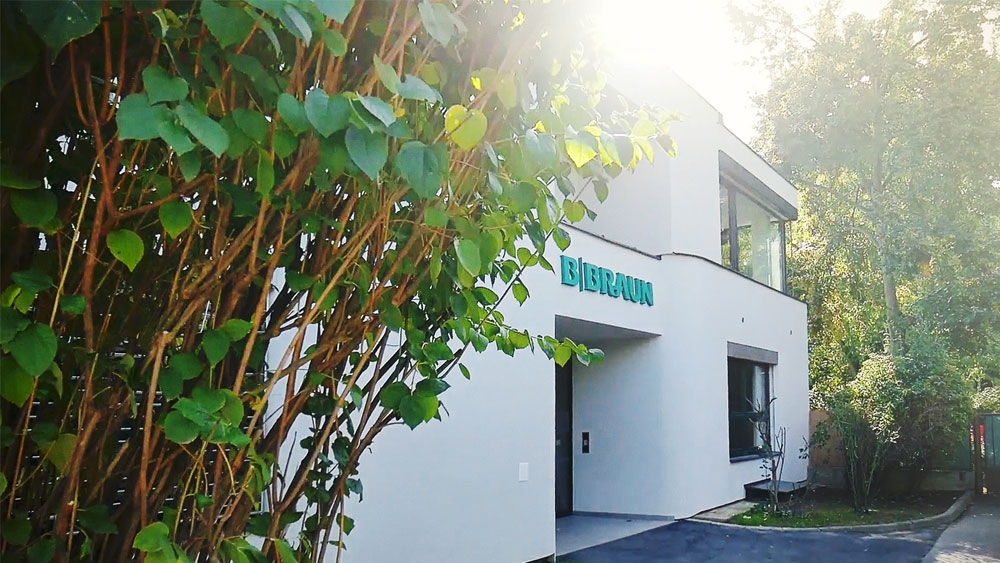
At B. Braun, sustainability has long been a company value, and we are committed to shaping a more sustainable future in dialysis. We collaborate with experts and actively contribute to initiatives like the EU-funded KitNewCare project and the EDTNA/ERCA Green Excellence in Dialysis project. As a provider of more than 350 renal care centers worldwide, our journey to reduce our environmental impact began over a decade ago already.
Learn more
For us, real care begins with responsibility toward patients, caregivers and the world we share. It starts with personalized treatments tailored to each patient and extends to sustainable solutions. That is why we develop technologies and products that help reduce the environmental impact of dialysis by reducing water and energy consumption, waste and CO2 while supporting high-quality care. This sense of responsibility shapes everything we do. That is what we mean by real care.
Learn moreYou will be contacted by a Green Dialysis Expert. Kindly check your inbox and confirm the e-mail we've sent you.
Your feedback matters! Participate in our customer survey to help us enhance our website, products and services. Thank you for your support!


